

Tuesday, September 15, 2026


- Article
- Comments (0)
An Anna's Worth
SHASTRI RAMACHANDARAN, EXECUTIVE DIRECTOR, NATIONAL CENTRE FOR ADVOCACY STUDIES, OM THANVI CHIEF EDITOR, JANSATTA | New Delhi, September 8, 2012 14:10
Tags : anna hazare | indian media | |
Tags : anna hazare | indian media | |
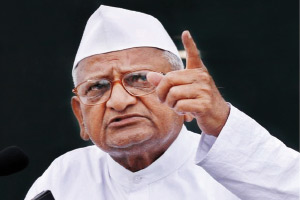 Apart from causing the political class of the country no end of woes, the Anna movement has also stirred up a hornet’s nest among the media watchers in India. Some have blamed the media for blowing the whole thing out of proportion. Others have defended the media’s stand. How the regional and English media have covered it has also been put under the scanner. Two stalwarts from either ends of the spectrum write for Media Watch, bringing to the table their own unique analysis of the issue.
The Anna-data of the Indian media?
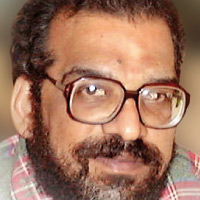 The Anna Hazare – Baba Ramdev anti-corruption circus, once again raises the question of whether the Indian media can be trusted to function in a manner that is independent, free and fair in its coverage of politics and public affairs.
Let’s go back to what we witnessed in August 2011 when Hazare sat on a 12-day fast at Jantar Mantar. The Indian media cast aside every last pretence of objectivity and blatantly rooted for a so-called cause reduced to one person, one viewpoint and one agenda; and promoted these and itself as being representative of ultimate political values, morality, authority, knowledge and wisdom.
From the very beginning, a bulk of the media was dedicated to covering the “cause”. Anyone who was not for it was painted as being against it, and ridiculed and defamed. The media failed to objectively show that the country was not divided into two camps: for or against Hazare’s fast. There was the Hazare camp pitted against the government and Parliament, but not all in the ruling United Progressive Alliance or even the Congress party were one in their view of the Hazare campaign. Similarly, different parties took different positions, and Parliament as an entity was not pitted against Hazare as made out by the dominant media, which was pro-Hazare. Many political parties and a large section in Parliament, including from the UPA and the Congress party were articulate against corruption and in favour of a Lokpal. They were not opposed to Hazare’s demand but his method.
Furthermore, despite pressing for transparency and accountability on the part of political players, the media failed these very tests on several counts, including: refusal to scrutinise the record and conduct of those it promoted; non-disclosure of the benefits gained by joining the campaign; its connections to the gurus and godmen involved; the role and contribution of stakeholders and advertisers; and, not telling the audience that some of the channels and their leading figures were also facing allegations of being involved in corruption, influence peddling and dubious political dealings.
Neither the print nor the electronic media appeared to be independent of political, business, commercial and religious interests in covering Hazare’s fast and the confrontation between the forces on the one side of Hazare and on the other, of the government and Parliament. In the entire campaign against corruption, the corporate and business class, which is no less corrupt than the politicians, have been either sanitised, kept out of focus or shown as helpless victims.
This was also borne out at a panel discussion, in August 2011, on the subject of “Media on the Politics of Corruption” at the India International Centre in Delhi conducted by an association of media professionals with reasonable and respectable people at the helm – who unfortunately did not live up to this reputation.
In the chair was a ‘journalist-activist’ in the good sense of the term. Four of the seven panellists – two ‘journalists’, Prashant Bhushan and Yogendra Yadav – were flag-wavers for the cause. The other three were Aruna Roy, Vineet Narain (the journalist who blew the lid off the Jain hawala case) and one other journalist.
The latter three, especially the journalist who stood out for his sober articulation of how journalism was implicated in the issue, stuck to the day’s theme. The other four used the stage for promoting Anna-ism: Prashant Bhushan was at his clever best, selling Hazare’s campaign, his version of the Lokpal and defending unnamed corporates that were opposed to corruption; Yadav the social scientist glossed over and rationalised some outrageously ignorant and illiterate rants of a messianic panellist; the other two journalists were self-obsessed zealots.
Narain and Roy stuck to the straight and narrow of the topic under discussion. After a while, willy-nilly, they too got dragged to the ground opened by the crusaders, who appeared to have brought in their cheerleaders for the occasion. Neither the chair nor the organisers attempted at any point during the 3 hour session to steer the discussion back to the stated agenda. Perhaps, they were overwhelmed by the overflowing auditorium, which they (mis)read as a tribute to their “pulling power”: the gathering was hardly of the size and type conducive to rational stock-taking and sober reflection; it was more like a public meeting where audience expectation dictates performance and output, and whoever played best to the gallery evoked the loudest and crudest applause. What did not add to the aggrandisement of Anna, Annaism and the Ann-activists was either sidelined and not dwelt upon or jeered at.
Expectedly, Aruna Roy was sidelined; the anarchists had a field day with the added thrill of gleefully taking uncalled for and unfair potshots at Arundhati Roy; and the audience had a great time wallowing in the self-satisfying orgy.
The discourse, if it may be called that, pandered to the audience with an eye on applause. The organisers, much like the media riding on Hazare’s campaign, supinely gave in to whatever was happening, delighted that their “event” had evoked such a tremendous response. They did not pause to ponder what the purpose was and whether it was being served at all in the least degree.
As a result, media professionals who professedly set out to do some serious soul-searching went the way of the well-bankrolled media and its friends with benefits.
Indeed when the media turns newsmaker, sheds objective and fair coverage of public issues and plunges into partisan politics, then it must be viewed like any other political player. Its credentials, assumptions and claims need to be tested.
The English media's superiority complex
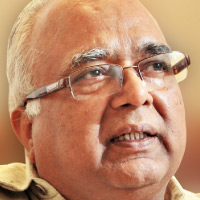 The way the Indian media has handled the Anna movement has been the subject of a lot of debate. The media has been accused of blowing it out of proportion, even being the propellant for the movement itself. Most of this has come from the political class. The political class has its own compulsions and say things that suit their own ends. Without going into the merits or demerits of the movement, I for one feel that the media handled the issue reasonably well.
Yes, the coverage was wide but the issue demanded it. Never has India seen the common man come out on the streets in support of an issue like this since the struggle for independence. That deserved all the attention it got. What happened to the movement later is a different issue. But as for the movement being driven by the media, no media organisation can even hope to mobilise public opinion to that extent. Yes, many joined following the media coverage but the thoughts were already there. Just that, they were never articulated before Anna came along.
Interestingly, there was a marked difference between the coverage that the Hindi and English media gave the issue. I think that the English media, particularly the electronic media, to a large extent , has failed to grasp the true essence of the movement. It was not merely Anna that was the story. There were thousands of stories around the issue – how thousands of Delhites gathered in the field without their customary aggression, how people put up with congestion and crowds without the normally incessant honking of horns, how and by whom food was managed for such a large gathering – all these were stories in themselves. The Hindi media understood this and covered it but somehow, the English media failed to do so and blamed the Hindi media of sensationalism.
A large chunk of the English journalists hail from Hindi speaking backgrounds themselves. If not Hindi speakers, they are not Westerners at any rate. Why then, did they fail? I think it is due to their elitist mentality. I will not enter the debateon whether the English journalists hold their Hindi counterparts in contempt. However, that the reporters, desk personnel and editors of Hindi papers and magazines are invariably paid much less than their English counterparts is hard data. Their superiority complex and snobbery is clear from this. It might be the post-colonial hangover, not only in this industry but the nation at large, that causes this. Now here I must mention, this is a broad generalisation. I am not saying that all English journalists are like this. I am merely saying that many are.
Also, there is a distinct difference between the backgrounds that these two kinds of reporters come from. Most of the Hindi journalists come from the villages and small towns of India. Many of them are also not very highly educated. However, they have a very strong feel of the sub-urban and rural realities of the country. On the other hand, the English journalists are mainly from a urban background. Many are highly educated, from fancy colleges like St Stephens’ College, some have studied in prestigious universities abroad like Oxford. They are largely from an upper middle class background. In comparison, until recently, a number of the senior Hindi journalists were barely graduates.
Take the legendary Prabhash Joshi, founder-editor of Jansatta, or Mangalesh Dabral, a distinguished editor for example: neither studied beyond high school! I have worked with both of them and can say with full responsibility that they were ideals for all journalists, English or otherwise. You will not be able to find a single English editor of that era with such low formal qualifications but with such breadth. Of course, now things are changing. Most Hindi journalists these days are at least graduates, many have higher degrees, many from media institutions. But this divide is still there.
As can be expected therefore, the Hindi journalist is far better attuned to the pulse of the nation than the English media which doubted Anna. One person in a particularly high post actually told me that Anna had been slyly drinking juices when he went off stage! I cannot even think of levelling such an accusation because I, and others like me, have seen such “crazy” people of passion and dedication in our towns. We recognise that look, the tenor of that voice that comes from these Gandhi cap clad men. We remember men like Gokul Bhai Bhatt giving Bhairon Singh Shekhawat sleepless nights over prohibition.
In the name of objectivity, English media have been trying to show such movements down while the Hindi media has captured the pulse of the movements. Not that they were following diktats of the authorities. I just feel that it was English media’s own inherent class prejudice that did not allow them to properly cover this mass movement.


 Issue Dated: Feb 5, 2017
